Wednesday, December 5, 2012
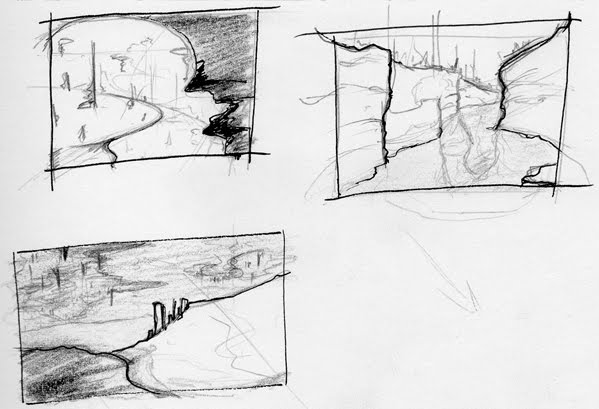
A few copic sketches this past Summer
Tuesday, November 13, 2012
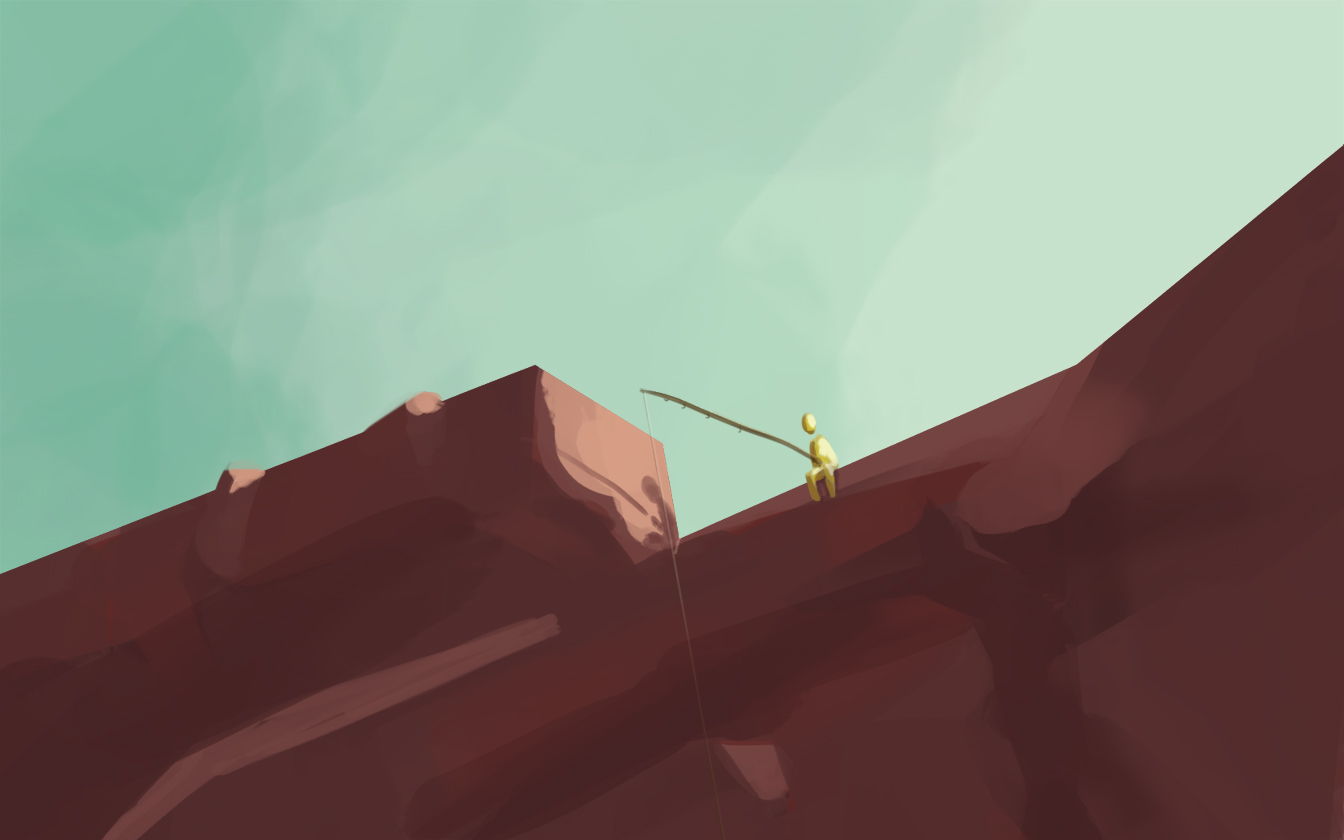
Color. A day.
I don't want to be stuck in one or two types of color palettes. Blue-green is one of those color combos I have a really hard time getting to work. May as well keep trying it otherwise I'll be stuck using oranges and reds versus blues all the time.
~Mikell
Monday, May 7, 2012
Go At It. a mental note to self
Eggs and Bananas.
---------------
Art isn't a technique. Methods are also not the root of style.
Your style is determined by your values and how you choose to see the world around you.
No matter who you are.
You're capable of seeing, hearing and feeling something beautiful or something interesting.
This is why everyone has a style and anyone can be an artist if they can bridge the gap for communication.
To pursue something artistically is about refining this communication by using the techniques that you hone through the years to share visions and feelings. It's all learning about how you experience the magic of reality (or surreality) and displaying it in a way that can be understood by the audience.
Your methods are your vocabulary, but they aren't actually what you perceive.
Artists are explorers of communication.
Again. You're capable of seeing, hearing and feeling beauty or intrigue.
--------------
To me, art is a dialogue: A conversation that does not have to have words.
If you can strike a conversation, then you're getting somewhere.
I do, however, think the nature of the conversation should always be healthy.
I'm not saying to abstain from controversial or touchy subjects but to be aware of the nature of the dialogue you wish to bring forth (especially when religion and personal fetishes are involved).
How comfortable are you making the audience feel? Are you simply being confrontational? Are you imposing an idea or are you merely suggesting it?
Sometimes, though, I feel that a lack of focus on real stimulating dialogue can lead to a lot of rambling in art or an over-simplification of a concept.
I think I'll come out and say I don't believe in falling back on "Artistic License" because I think it's just feigning ignorance when you cause a stir and/or the artist is just too mentally lazy to really ask WHY.
When the audience isn't respected as someone who is capable of having meaningful input.... how does that make a point? Will the audience even be willing to listen to you when you obviously don't think of them as more than someone you can be condescending to (or dupe into giving you cash)?
For anything conceptual, I think anyone who is able to get people talking should at least try to figure out the words to explain what they do in order to stimulate conversation. I really don't think there are a lot of artists who 'are simply bad at expressing themselves in words' where they are unable to explain themselves to any extent. When it comes to concepts that have compelled them enough to actually make something, I become a bit skeptical.
Einstein said that "If you can't explain it in simple terms, you don't know it well enough."
I'm not sure if I'm alone on this, but I think it's actually more acceptable to say, "I'm not sure." or "I don't know how to put it into words yet." It tells people that you do think about it.
...and for the love of all things good, please don't just think, "whatever" when it comes to your work not hitting the mark you want. That's what practicing the craft is for. Perfect communication is really really hard to achieve, but that shouldn't stop us from trying.
-------------
Many I've seen will resort to limiting the depth of which they explore concepts in order to keep their arguments watertight.. and that it's almost futile to go deeper without losing our grounding or opening up a can of worms of unrelenting criticism.
To me, art is a part of the journal for society no matter how strange, or superficial something may seem,
but it is also necessary for art to be dynamic and always question the canon. To defy convention is one of the key natures of an explorer.
Without it we may become derivative machines 'Frankenstein-ing' our way through concepts by only mixing and matching tried-and-true methods that were established centuries ago.
but "Our knowledge has made us cynical; our cleverness, hard and unkind." - the Great Dictator.
Do we simply revel in impersonal notions and popular trends in order to ride the wave to hopefully gain recognition? Is it really futile to speak out if you see something that bugs you or intrigues you? Are the only guidelines we give ourselves, "Has it been done before or done to death?"
Don't get hung up on finding something 100% brilliantly original. Just because something has been done before doesn't mean it can't be done in an impactful way according to YOUR way of seeing.
When we stop worrying too much about making something for innovation's sake and develop ideas being driven by our real needs and wants, you'll make progress. You may even stumble upon something innovative without knowing it.
--------------
Of course conceptual ideas and abstract notions aren't everything.
The craft is just as important. There are an increasing number of capable, smart artists (or should I say people who realize they can be creative) arriving on this planet everyday. I just think most of them are selling themselves short by thinking that they don't have something significant or interesting to say. Your idea does not have to be powerful enough to start a revolution. It could be as simple as making someone smile.
There's no time like the present to start expanding your vocabulary of methods.
Many of us will find solace and a deep satisfaction from the process of creating and learning craftsmanship. There's nothing wrong about that because that's the only way to get better at portraying ideas, but to really grow mentally, you can't use that as a retreat all of the time. Don't let the obsession of learning your craft shut you off from trying to make something that you believe in.
Don't delay your great stories and conceptual worlds just because you feel that you don't have enough knowledge of the craft to show it in its full glory where, 'I need to know all of these techniques to start considering making this piece a reality'. There will always be more techniques waiting for you.
Always be willing to try out what you can do at this very moment.
It may take you much further than you first realize.
Language is wasted if we're not using it to tell something meaningful.
You've got a vocabulary.
Test it out.
It'll be fun. I promise.
...and the sensation you get when someone sees your work and finally says, "I know the feeling!" is what makes it all worthwhile.
Professionals may not be paid to think very laterally, but I believe you owe it to yourself to reach your fullest potential both in the craft and in meaningful thought. It's for your heart. Let's not all become the 'art machines' that schools glamorize oh so much. We are not machine-men and machine-women.
The artists and the audiences are more than numbers.
We are people with joys, problems, hopes, anxieties and dreams. Both sides are.
---------------
take care,
stay creative,
and most of all,
stay considerate
if you want to get some meaningful conversation going.
~MikEll
Monday, November 21, 2011
Thumbs and Fingers 001
I can't believe how little I've actually done in digital painting/drawing of landscapes considering how much of a fascination I have with them. I had always put speed painting on this pedestal of something that can only be done by people like Thierry Doizon, Feerik, Sparth, Andrew Jones... etc. and I've always been more of a clinical person when it came to perspective and the technical stuff of being creative.... that I almost neglected putting things in practice.
What's stopping me? ...... nothing.
I'll have to say this was my first honest-to-goodness speed painting exercise.
First pic was a couple of hours of noodling.
Second pic was under an hour including gathering all the ref pics.
Will have to get faster at this.

Birch Pillars: concept


Was taking a gander at birch trees and how their patterns are like.
Thought of pillars or cacti-like things in a kind of barren landscape.
Just some quick pencils. Trying to figure out a feel of energy of these pillars.
On that note, I've also been looking at trees differently as well. Figuring out how to caricature trees is an interesting process.
Wednesday, November 16, 2011
What is the true meaning of Collaboration
...
Randy Nelson sums it up quite nicely.
It shouldn't be about simply praising/putting down people's ideas, but building on the contribution to others while also making them look good and running with them.
Randy Nelson's example of the rain and umbrella really nails it.
Actor 1 says that it is raining.
Actor 2 could have reacted and exclaim, "What are you talking about? It's not raining indoors."
OR he could go along with Actor 1 and say, "Well that's why they gave us umbrellas!"
It's that playful sense of running with an idea to 'create' opportunities instead of stopping them.
Apathy cuts off possibility.
What really hit me about this was that this reminded me of why I enjoyed drama class in high-school so much. When we would improvise scenarios like dialogue, we would not only try to be creative with how we deal with the scene for ourselves, but we would actively try to create interesting predicaments in order to give another group member an opportunity to play around with it. Share the spotlight. Don't hog it. We are there to amplify each other, not compete for attention. The good thing about drama class was that it forced us to learn this because if we didn't play off of each other, the whole performance would collapse and everyone loses.
...
I recently watched the American Film Institute's Master Class: Art of Collaboration with John Williams and Steven Spielberg. The talk was about their collaboration for the past four decades as Composer of Musical Score and Director.
One of the parts that really stuck out was when Spielberg describes how sometimes he would shoot a sequence and feel that he can't wait to show it to John. It wasn't because he had some specific music in mind that he wanted John Williams to score. It was because he couldn't wait to see how John would go about writing sound for the scene.
Spielberg knew that the shot would be something that Williams would be excited to compose to.
Celebrate the fact that there are multiple creative minds in a collaboration.
...
This leads to a few possible kinks.
There must be a sense of trust among the collaborators. One of the many boundaries to true collaboration is fear. There is the fear of losing the original vision amongst a sea of ideas, the fear of 'butchering' your initial vision, or even the fear of competition in credit.... is this simply the ego talking? What would happen if you let your idea loose? Would you have gotten the idea to blossom as well or as quickly if you had kept it to yourself?
More often than not, what comes out of it is surprisingly intriguing because not only could you find loopholes in your vision faster, but that person can bring their own experiences to the play area. You know it's working when all parties are able to let go of their ego (not dignity. big difference) to try things and yet stay courteous and respectful to each others' visions.
...
I keep looking back at my immaturity in highschool where many times I feel that I was trying to be the center of attention for no good reason. That kind of glory never lasts.
The most gratification came when I shared the stage with friends. It certainly took a while to realize why, but I'm glad that it finally dawned on me.
I won't actively wish to be an 'interesting' person.
The world is already full of 'interesting' people, but not that many are 'interested'.
I'll be striving to be a part of those that are curious.
To observe. To listen. To ask. To invoke.... while staying thoughtful and considerate.
Whether I am.... is not for me to judge.
It is for me to do.
Tuesday, October 25, 2011
Compositing Basics - MAYA to After Effects - The RGB Matte Passes
1.Set up a new render layer in Maya where the objects in the scene are present (no need for lights) and set up 4 surface shaders.
One for each color (diffuse is fully red, fully blue or fully green) and black (which will be used as blank). First assign the black to everything in the layer.
2.Assign colors to the objects you want to separate out... Up to 3 regions per render corresponding to each color.
NOTE: you'd have to give the material displacement if needed
(this is in the shader group of the surface shader, not the material itself. See the node by viewing the in-and-out connections in the hypershade, then connect the file node of the displacement map into the displacement channel.)
3.If you have more than 3 areas you want to separate out to do individual adjustments, make another render layer and assign the red blue green shaders accordingly.
NOTE that if, for example, your red shader was used on an object with displacement, you'll have to make a new red if you want another object in another layer to not carry over that displacement.
4.RENDER it out

Note that I made 2 render layers because I had more than 3 separate objects I wished to control in post.
After Effects:
-Note that this does not have to be only for the Beauty Pass-
1. Take your beauty pass and your desired rgbmatte pass and put them into the same sequence. The matte layer should be underneath and therefore, hidden behind .
2. With the beauty pass selected, go to Effects -> Channel -> Set Matte
The new effect should let you choose to use the rgbmatte pass, and also the color channel you want to turn into a 'clipping' mask like in Photoshop. (choose the red channel, for example, and for this beauty pass layer, only the object that has the pure red in the rgbmatte pass will be visible)
3. Now you can adjust only one object's levels/saturation/colors etc without affecting the rest of the image
4. Make a copy of the beauty pass as another layer and do another Matte if needed. Keep going until you have the control that you want.

In this example, I used the red channel of the first matte pass to isolate the house and then perform some hue shifting to it.
Saturday, October 1, 2011
Setting up AO Materials for a Render Layer in MAYA: Mental Ray
This is all using Mental Ray's mib_amb_occlusion node.
It should also work with V-Ray's Vray Dirt node if you're using it.
First Method - Surface Shader
Simply make a surface shader (under 2D textures) and connect the occlusion node into its Out Color.
Second Method - Mib_lambert_illum
Use the mib_lambert_illum material (under mental ray textures). Set the ambience (top) and diffuse (bottom) slots to full white, and the 'ambient' slot (the middle one) to plug your mib_amb_occlusion node into.
(When baking out an AO map to multiply over your diffuse layer in photoshop, using this method seemed to work more often for me than the surface shader method. I think I gave it 128 or 64 samples for a 1K map).
Third Method - Lambert -
Use a normal lambert (the MAYA texture one) and set all of the slots to be black. Plug the mib_amb_occlusion node into the incandescence slot.
Fourth Method - Mia_material
Full White Diffuse color. Black for Reflection. In the Ambient Occlusion section in the attribute editor, Ambient Shadow color is black, Ambient Light color is white (default is the other way around if you want the material to have ambient occlusion without interfering with its diffuse and etc because the Ambient Light will wash out diffuse if it's not set to black)
____________________________________________________________________
Also important that there's no lights in the render layer (hide them if there are any). Unless you are using the surface shader method because surface shaders ignore lights anyway.
Also note that if the result is going too much into middle gray (where even the lightest parts are grey) you can pump the value of the Light color in the ambient occlusion up. (or lower the occlusion distance if it's shadowing too much all over)
- when choosing the color and setting it to white, you can change the way to set the color at the bottom right. There's a dropdown from setting the color by "RGB 0 to 1.0" and change that to "HSV".
With HSV on, now you can pump the value of white past 1 and the lighter areas'll whiten right up. The last project I did had to have my ambient occlusion pumped to about 3 ish to make it white enough for my liking.
Be careful with Black going into negative values, though. It might burn the look, so it may be better to just adjust the image sequence in after affects (or photoshop for the baked out map) with a quick levels adjustment. The key in Maya is getting the right kind of shadow falloff.
Monday, September 26, 2011
Tribute to Betteo's berry.rainbow

One of my favorite illustrators is from Mexico.
Patricio Betteo has a way with mixing forms and texture into abstract shapes while giving just the right amount of closure to play with our perception.
Betteo's Blog
I don't think my tribute can compare at all, but I really wanted to give that atmosphere a try.
(and just a few days ago I realized that I missed the fact that there's a street light in front of the house in the actual painting :[ )
Here's the final
I still have tons to learn.
exciting
Sunday, May 29, 2011
that icon of mine
Just messing about with masks, filters and adjustment layers.
Saturday, May 28, 2011
Wednesday, May 25, 2011
An old project revisited: PRESENT
Last year I picked it up again and started tweaking the shape here and there. Last week I finally decided to put down my chisel and sandpaper after working on and off of it for the past year.

This was called 'PRESENT'.
It's smooth and rough in some places.
It's intentionally not too spherical to be more organic to the touch.
Only if the audience feels all around it would they come across the inner parts of the cracks being smoothed as well (the underside). A present to those willing to explore it, if you will.
The piece is about how we present ourselves to the public eye.
What is eye-catching and what are others' impressions about us (our most apparent strengths and flaws).
It also looks at the notion of what is in the comfort zone of someone to share traits about themselves/ what is polite and considerate for someone to ask about another person. What's appropriate to touch in a sculpture presented to you? Should I even touch it?
One thing that I always try to avoid is to come to quick conclusions about people, no matter what my first impression of someone may be. Everyone has a story that is valid when seen through the right eyes. I have a fascination with empathy.
Personally, this was like some mental blockade that's been hanging around in the back of my head for the past 5 years because I had always wanted to 'finish' it.
It still has boatloads of parts I could refine, but then that would be me trying to cover up my past instead of carrying on.
Friday, April 29, 2011
Getting into Drawing Again

It's been a while since I sat down and just doodled.
Thinking about some vegetation and being more free with them.
Really loose and just lookin' at shapes is all.
Wednesday, April 20, 2011
Progress Shots: The Bus Stop

It's obviously deviated quite a bit from that idea. I was talking to my classmate Ed Squires about remembering that 3D doesn't have to be about conventional usage of space because the screen we watch is like a stage where we have free reign to manipulate everything.
From trying to make 4 figures standing at a realistic roadside curb, I changed its direction to be a tribute to the theatre that I had done in highschool. There's a stretched canvas disc in the middle as a faux light source and a play on shadow on the floor. Some slow moving trees are also in the foreground.
This one goes out to all of the Bonsai Cacti Crew.
You know who you are.
cheers,
Mike
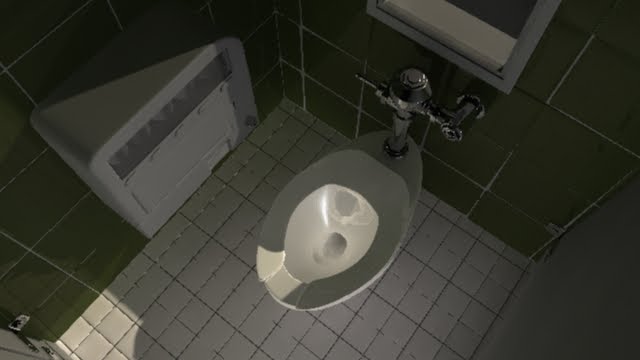
Progress Shots: PaperPLZ
Testing Lights and quick materials:


Floor and Dispenser tests:


The final look:

Here's a test composite of just the vending machine.

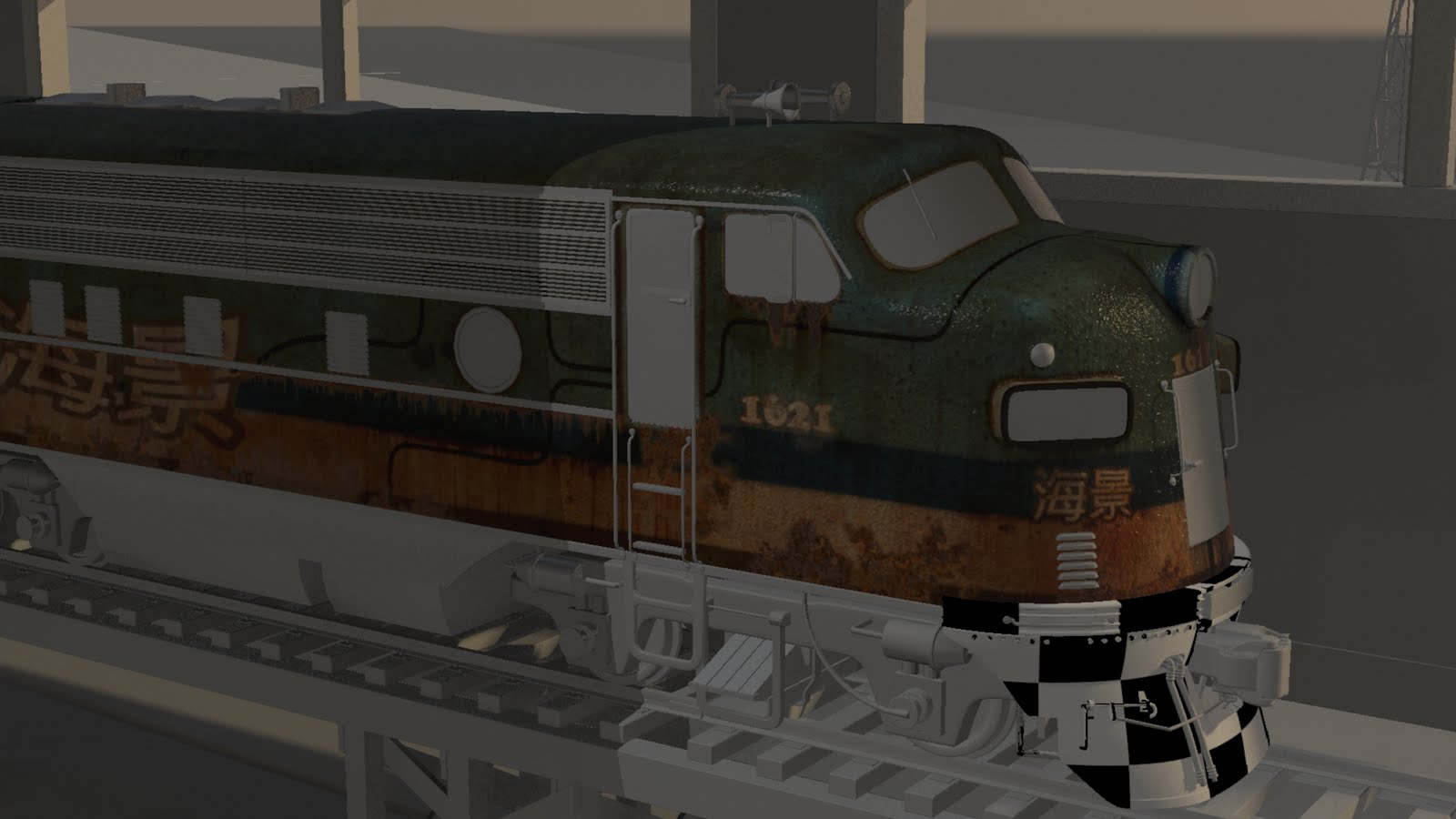
Progress of this Semester: TRAIN


Some of the Progress shots. Mostly from trying to get the wood looking alright.
One of the first renders of the train's main body:

Mudboxing a wooden plank for the boardwalk and testing lights:


Here are a couple of stills from the final train scene.


Cheated the reflected caustics using the generator from
http://www.dualheights.se/caustics/
via a tutorial from
http://www.mrmaterials.com/jeffs-blog/107-projected-caustics.html
Hilarious. I looked back at the train file and was looking for the spec map. Especially after it was pointed out that there were parts where there the reflections weren't adhering to a nice metal that's rusted (thanks, Freddy).
I found that....... there was none. It's a train made of plastic. (forehead meets tabletop)
Sunday, March 13, 2011
A return to an old problem
I dunno if it's just me doing something wrong or if caustics simply don't work for nurbs. I converted the surface to be polygons and it worked fine afterward.
Here's a new render: